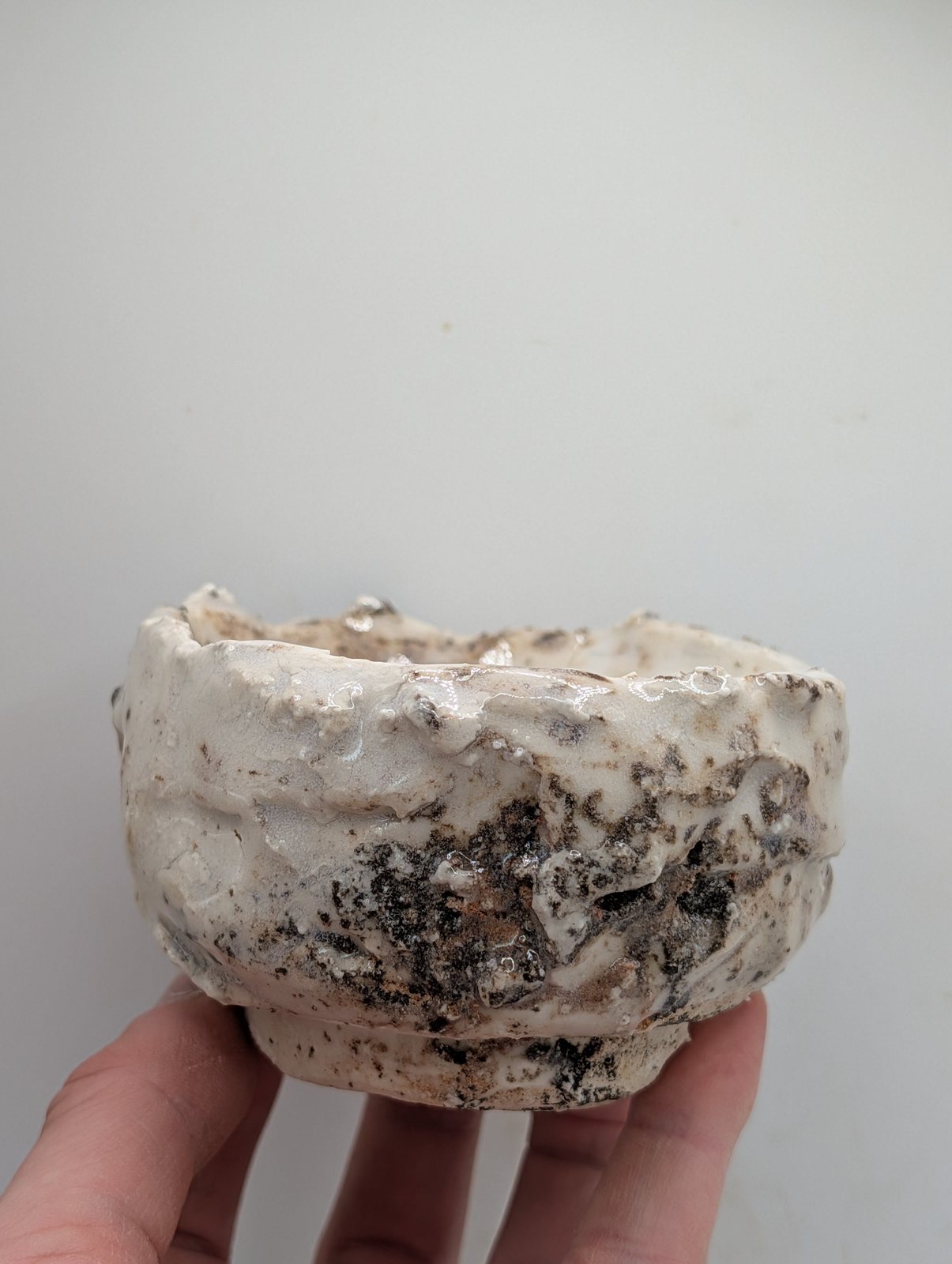
The curiosity
I wanted to get better at clay by making a great deal of it, and I wanted the price of a pot to stop being a guess. So the whole thing got one rule: ten thousand pieces, numbered in order, each one cent more than the one before. Piece 1 cost a penny. Piece 10,000 will cost a hundred dollars.
What it does
The rule does the pricing, the numbering does the record, and the record becomes an archive anyone can walk. A pot leaves the shelf and takes its number with it. Someone can own piece 412 and know exactly where it sits in the run, and what came before and after.
The system
Pieces are made in small batches, photographed, numbered, and listed. The shop carries the listing; the archive carries the page. Every photographed piece has its own address, with its photographs, the day it was photographed, and a link to buy it. The ledger runs in number order, grouped by the day of photography, with hand-picked ranges through the number line.
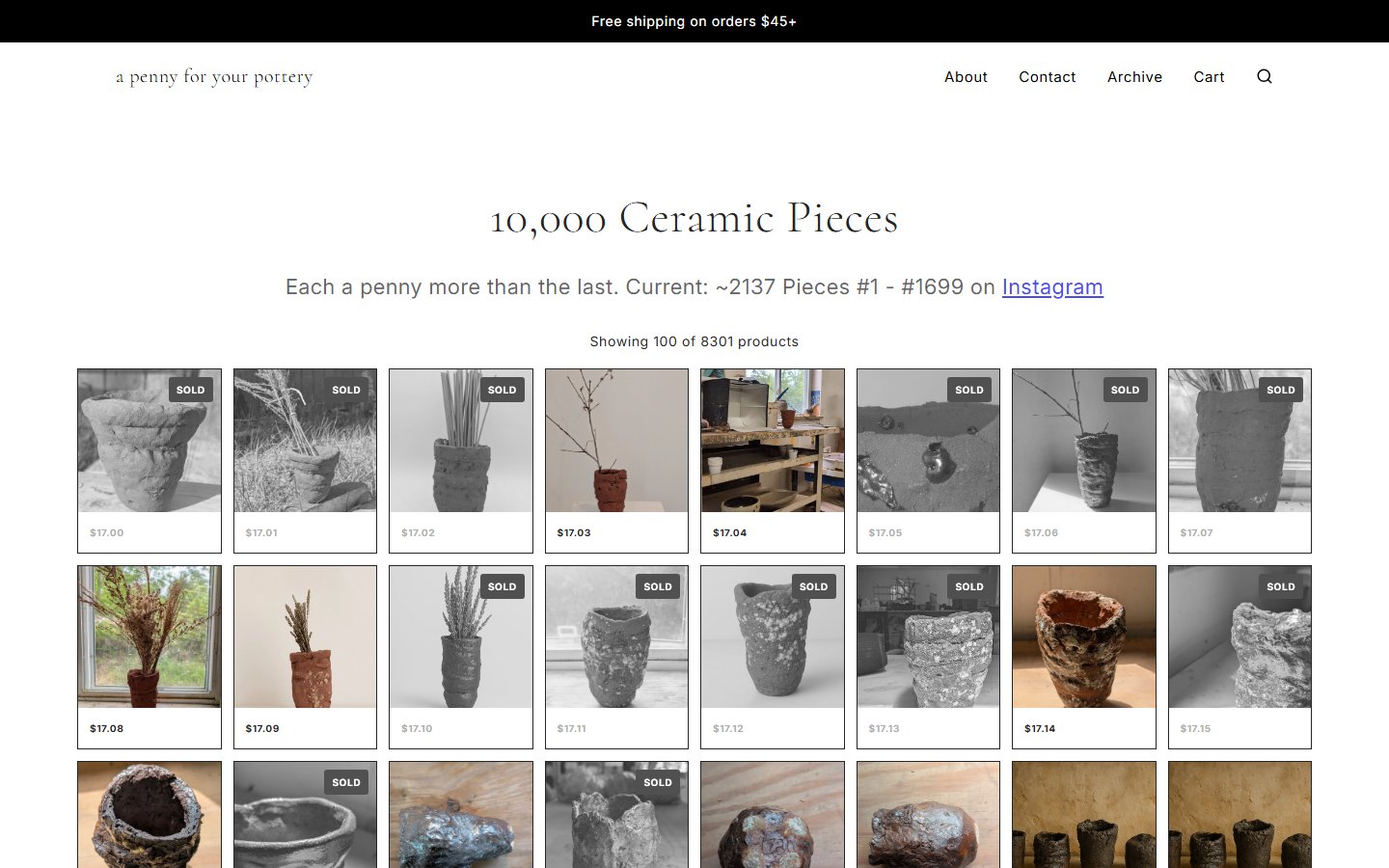
Cause and effect
A piece is photographed. By the time it is listed it has a number, a price, a page, and a place in the run, and the run is one cent longer.
- Piece 1, $0.01
- Piece 2,253, $22.53
- Piece 10,000, $100.00
The price of any piece is its number times a cent. No exceptions.
What changed
Pricing stopped being a conversation. Collecting stays possible at every stage: the early pieces cost less than a stamp, and the late ones will cost what a good bowl costs. The work documents its own improvement, because repetition is visible in the number line. More than two thousand pieces in, it is a snapshot of where the work is, not a finished statement.
Experience it
Browse the pieces, or walk the archive, where every photographed piece has a page.